| Ten Questions With A Guy Called Gerald | |
 |
Textura June 2006 Weblink |
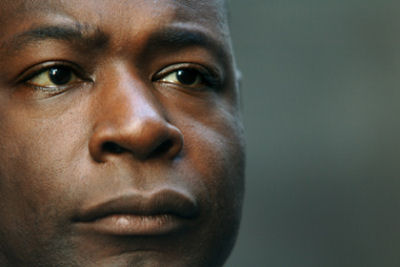 Earlier this year, A Guy Called Gerald (Gerald Simpson) made his Laboratory Instinct debut with a 'drop-tech infusion' mix of Dell & Flügel's Superstructure featured on the duo's Study For A Skyscraper EP. Now the British acid house pioneer and drum'n'bass legend is set to issue his own full-length on the German imprint, the appropriately-titled Proto Acid The Berlin Sessions. Having literally influenced generations of music-makers with an incredible discography that's grown incrementally deeper since the ‘80s, the Manchester UK native and now Berlin resident executes the infectious 71-minute jam with a masterful meticulousness (elaborating on the running time, Simpson says, “I tried to keep it compact and tight. Usually, on laptops I like to do an eight-hour set.”) Drenching Detroit-styled techno in sparkling electro, the set, recorded live in one session using two laptops and a DJ mixer at Gerald's Diehold Studio on February 11th, 2006, flows with a relaxed ease. With one exception (“Auto Rebuild,” the third track, is a remake of 1990's “Automannik”), the album's 24 raw, club-oriented tracks are all new and were created over the last year in Berlin. Simpson doesn't waste a moment, immediately invigorating the set with a pumping tribal groove (“Marching Powder”) before moving on to the steely funk-throb of “The Strip.” The mix's strutting electro strain makes its first appearance in “Auto Rebuild” and dominates thereafter, though its presence is subtly modulated from one cut to the next, at one moment oozing a house vibe and the next techno. “Skitzoid” casts a mechano spell, “Night Flight” breezily rocks, and the jacking cut “Voltar” broils feverishly for almost eight minutes. At this stage in his career, one might assume that Simpson has covered every base imaginable, but apparently that's not the case. Referring to the new release, he says, “It's the culmination of a dream I've had since I started making music, and that's to take the studio into the club; this album is snapshot of those possibilities.” 1. Proto Acid The Berlin Sessions is obviously different from your last full-length To All Things What They Need. Did you deliberately set out to create something different from it, or did the tracks simply develop that way of their own accord? It was prepared in a way that it could be performed in a club. I was invited to a series of small sessions with friends where I would jam live and I prepared tracks especially for these nights. All I can say is the secret to this formula is there never is a final mix. What I mean is, every time I perform this material live it's always different. You may recognize the melodies and some of the loops but every time they're crafted together in a different way. This particular session is just one jam. 2. Though some of your past releases would be classified as drum'n'bass and house, this one sounds to me like a Detroit techno-electro merger. How would you describe the overall style of the album? To me it's proto acid; it's how I feel house/techno music would have sounded if the whole rave thing hadn't happened in England. When I was younger, I would go to soul and funk clubs and you could easily mix a techno/house track into your set without spoiling the environment. Could you imagine playing a techno track at an r'n'b club today? Things have splintered and fragmented and floated so far apart that funk seems to have dropped through the cracks. I'm one of those preserved creatures that basically loves to use genres as a palette. So when I say proto acid I'm saying this stuff has direct lineage to Chicago and Detroit in the mid-to-late 80s. 3. Aside from a few snippets here and there, the new album eschews vocals. Why did you decide to exclude vocals? On my last two albums, I felt pressured to include them. Nowadays, I feel singers should be put on a bale of hay with a piece of straw hanging out of their mouths while playing acoustic guitar - keeping it real, if you know what I mean. I want to make music for clubs and sometimes you just have to get down and dirty into the machines and, to take it there, you can't hold anyone's hand. Some things just don't need a vocal. 4. Interestingly, track 13 (“Bumpt”) signals the set's first presentation of a conventionally recognizable 'acid' sound. I find it really interesting how the TB303 has come to be fetishised as an acid machine. For me, acid was all about the tweaking of synths and riding a groove, you know what I mean? Like, before the masses thought the Transistor Bass machine was a special tool for doing acid house music, I was already bored with it and had moved on to tweaking envelopes on other Roland machinery, so I never really possessed that value for the 303 like everybody else did. I feel like I followed my own path and was inspired by what was going on in Detroit and Chicago but always did my own thing. To me, the new album is acid and acid's a part of everything I do. 5. What influences would you say emerge during the set? (I hear Drexciya, for example, in “Space 1999.”) My influences are more machines. I'll hear a sound and then I'll build a whole story around it. 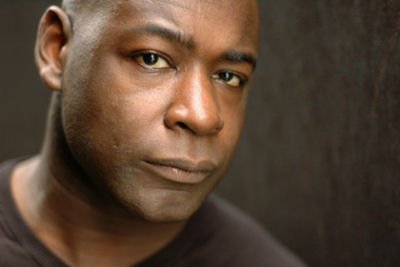 6. What prompted the move to Berlin and what's the experience been like thus far? Do you find Traum and Kompakt influences, say, seeping into your work as a consequence of living there? I decided to move because I feel like I shed weight when I move—psychologically and materially. I moved here because the clubs never shut; I need to get my groove on and there's nothing like a 12-hour stint in the studio and going out and getting your groove on before going to bed. I love living in Berlin. I love the clubs. I like the Sender and Boxer Sport labels a lot and a lot of the other small labels doing electronic music here. I'm not too much into Kompakt's main stuff. I try to enjoy other people's music without being too influenced by it. The thing about Berlin is, it's all about electronic music and club music, and there are very few cities in the world left like this. There are other scenes here as well but the underground is alive and kicking. 7. Given that you've amassed such an extensive discography, how difficult is it for you to come up with and get excited about new material that's different from what you've done before? In the past it was slightly harder to do than today. I noticed a sequence over the last decade of old stuff being regurgitated over and over again and, at first, I thought it was just that people didn't mind hearing it over and over again but then I realized that the older people get bored and fuck off and new people get excited about the same old thing. What I try to do is keep myself entertained as well as give the punters something new. 8. You've seen not only a lot of artists come and go but trends too. Did you ever find yourself being seduced by such trends or at least drawn towards or influenced by them or did you always have the discipline to focus completely on your own direction without being sidetracked? I suppose I look at it in a different way. I see all these trends influenced by me and a few others who were pioneering the way in the early days so I suppose there's no need to follow really. I think it's healthy that these 'scenes' exist and probably a good idea that they disappear after a while. I think if you come from the generation I come from, it seems a little bit immature to follow trends. 9. What are you listening to at the moment and what else can we expect from you in the future? Really abstract stuff... sound libraries... I'm making myself a collection of Roland Juno 106 sounds using soft synths to regenerate the sounds. I get really excited about these things because I can build a tune out of a sound. You can expect new music from Sender Records, from Perlon, from my own two labels Sugoi and Protechshon. I'll be launching A Guy Called Gerald Records for a reissues series, and there'll be a tour after the new album is released in August. 10. There are so many artists who don't receive recognition commensurate with their contributions (Terrence Dixon and Hieroglyphic Being come to mind as two examples). Are there any artists you can think of that haven't received their due? Yeah, loads of them but it's just one of them things, as an artist you can either look at that in a negative way like I didn't 'win' anything, any recognition, or you could look at it in a way that if people really like the music they will tell people they like about the music. I find that if I like someone I will try and turn them onto something that I like; that's how it all works for me. The media at the end of the day can be bought. Any old knobhead from some trumped-up record label can buy his way into being 'the best _____ in the world' and I suppose it gets them loads of bookings but at the end of the day it depends on your goals and your ethos. A Guy Called Gerald June 2006 [Author: Textura] |
|