TOWER OF LONDON ACCOUNTS AND ADMINISTRATION STAFF
ELECTROMAGNETIC RADIATION & COMFORT IN THE WORKPLACE
TECNO AO STUDY REPORT
by
Jukes Associates - Ergonomic & Environmental Consultants
Supervised by - Professor Derek Clements-Croome
Department of Building Engineering, Reading University
January 2000
REPORT SYNOPSIS
The results of this study of the accounts and administration staff of the Tower of London show a reduction of 36% in the number of ergonomic and environmental stress symptoms by them when using the Tecno AO Biomagnetic Protection technology to minimise the effects of Extremely Low Frequency magnetic fields from VDUs.
These results correlate with studies in other organisations, which show reductions in symptoms from 30 to 64% using the same technology. The cumulative findings to date indicate that ELF magnetic fields are responsible for over a third of office ergonomic and environmental stress symptoms.
ELF magnetic fields are probably the most significant single unsuspected source of stress in the office environment.
INTRODUCTION
This study was carried out with the Tower of London’s Accounts and Administration staff who are located on the top floor of the West Wing of the Waterloo Block.
The study is one of a series of studies to determine the effect of low frequency magnetic fields from VDUs on office staff health and well-being. The method is to use a magnetic oscillator (Tecno AO) fitted to each VDU and designed to neutralise the effects of ELF (extra low frequency fields) on the human body.
A total of 25 staff were included in the study. Nine Accounts staff are located in one office and the remainder, comprising a variety of other functions, are in a number of individual offices each housing between one and four staff.
The building is Victorian in origin and is constructed of stone and brick. The offices are not air conditioned and all have opening windows. There is an air conditioning unit in the attic space above the accounts offices which serves the basement.
All offices are conventionally furnished with modern desks, chairs, lighting and Personal Computers. Other than the nature and age of the building there is nothing to distinguish the offices from many thousands of others.
EXTREMELY LOW FREQUENCY MAGNETIC FIELDS (ELF)
ELF is defined by the International Telecommunications Union as the range from 30 to 300 Hz including sub harmonics below 30Hz and harmonics above 30Hz (cycles per second)
VDUs emit a range of non ionising radiation including soft X Rays, Ultra Violet, Infra Red, Microwaves, Radio Frequencies, Very Low Frequencies, Extremely Low Frequencies and Static. It is possible to shield from all of these (including ELF Electric Fields) with the exception of ELF Magnetic Fields. Most of the ELF Fields from a VDU are emitted from the mains transformers and the magnetic deflection coil. The main frequency ranges are 50-80 Hz. This gives a wavelength that is 3,000 miles long, which will penetrate lead, brick and ten feet of concrete.
Magnetic fields can be absorbed by soft iron Mu metal shielding. Distance can also be used since the signal strength falls off with the square of the distance.
However the body is sensitive to weak magnetic field strengths in the femto tesla range up to 18 feet from a VDU.
Since the body is more conductive than air to magnetic fields it absorbs them and they induce small circulating electric currents in the body. The NRPB acknowledge this and show the effect on their published wall poster on non ionising radiation. However they do say that they have no conclusive acceptable scientific evidence that such currents have any adverse affect on the body and therefore there is no cause for concern but that further research is needed.
The Swedish Government introduced the MPR2 standards for VDUs at 250 nanoteslas at 50 cm. This has been quietly adopted by virtually all manufacturers of VDUs. However this level was based on the best the industry could do at the time and on the philosophy of prudent avoidance. It should also be compared with the average of 30 nanoteslas in a house and 6 nanoteslas in the garden.
Bentham (1996) and Becker (1990) provide many references on the impact of magnetic fields on protein synthesis, activity of enzymes, changes in the immune system and other effects. Graham (1990) found changes in the body’s fundamental processes which resulted in the slowing down of the heartbeat and reduced ability to concentrate. Ady (1988) showed that cells exposed to 15 Hz magnetic fields resulted in a loss of calcium ions and that they can disrupt the inter cellular communication process including the transmission of nerve impulses. Seinkiewicz of the NRPB (1998) reported on the effect of 50Hz magnetic fields on spatial learning by mice. Preece (1998) at the University of Bristol concludes that 50Hz magnetic fields can lead to temporary deterioration of attention and loss of some memory performance.
Wolpaw (1987) found that levels of serotonin and dopamine were significantly depressed with exposure to magnetic fields. Continued depressed levels of serotonin can lead to depression and in extreme cases suicide ( Lancet 24 October 1987)
Lethargy has been a principal symptom of building sickness syndrome in many independent studies over the last 20 years. Becker (1990) and Strauss (1988) identified a new syndrome symptomised by severe fatigue, sore throat, tender lymph nodes, mild fever, inability to concentrate, depression and mental confusion.
The chronic-fatigue studies in the USA found that patients in general improved when they were away from sources of electromagnetic radiation.
The technology of bio magnetic field protection by compensating magnetic resonance was developed by Filion-Robin at the Technolab Research Centre in France. The device called a TecnoAO is a magnetic oscillator which is tuned to resonate at a peak frequency of 12 Hz at 120 femto teslas. The effect on the human body is to reinforce the body’s resistance to disruption by the other ELF frequencies emitted by the VDU. The device has been used in a wide range of scientific studies including the following -
a. Youbicier, Bastide (1995) of Montpelier University showed that exposure to ELF from VDU’s reduced the hormones Corticosterone by 58%, Melatonin by 92% and IgG by 44%. Exposure to chicken embryos increase mortality rate by 300%. TecnoAO protection showed no significant changes in hormone levels from normal and a significant reduction in mortality rates.
b. Myata and Namba (1998) Kitasoto University, Department of Ophthalmology indicate that ELF emitted from CRT screens seems to be a major factor in the development of corneal injury, extreme fatigue of accommodation and nearsight pupil response disorder.
c. Catier (1999) Avignon Teaching Hospital, Clinical Neurophysiology Department shows the VDU having a disturbing , stressing effect on the brain and reducing the strength of Alpha and Beta brain waves by the order of 50%
d. Canavan (1997) University of Luton showed significant reductions in alertnesss, energy and relaxation and significant increases in sluggishness, drowsiness tension and anxiety when exposed to VDU emissions. Arousal symptoms decreased by 60% and Distress Symptoms increase by 78%.
e. Marande (1996) Cochin Hospital. Occupational Health Medicine showed bioprotection from ELF showed increases in concentration of 23%. alertness 9% and speed 13% and an overall improvement in resistance to stress of 14.9%
f. Coghill (1998) Coghill Research showed a 66% reduction in lymphocyte count when exposed to electromagnetic fields. Biomagnetic protection showed and increase in lymphocyte population of 67%.
g. Hyland (1999) University of Warwick - The effect of ELF magnetic fields on living organisms relates to frequency and coherence rather than intensity and can create non thermal effects which can have adverse effects deriving from it’s information content as opposed to it’s energy content. The Tecno AO EM technology must be considered to be in the vanguard of a new generation of bio protection that conforms to the new concept of electromagnetic biocompatibility.
The 1996 First World Congress in Magnetotherapy had a wide range of papers on the use of low frequency magnetic fields for healing purposes. They are extensively used in Eastern Europe for accelerating the healing of bone fractures, tumours, skin lesions, war wounds, inflammatory rheumatism and migraine. The significance is that treatments were normally limited to 20 minutes a day and not more than 5 days at a time with a break of 10 days. It would therefore seem that ELF in small doses acts as a stimulant to the body’s natural healing processes. However, exposure of 8 hours a day to ELF from a VDU for 5 days a week for 48 weeks a year, could therefore conceivably cause overstimulation and exhaustion of the body’s immune system.
The fact that the NRPB maintains its advice to the HSE and Government that ELF magnetic fields from VDUs do not represent a hazard to health because there is no detectable heating effect is understandable. They carry the responsibility for the Nation’s welfare and must prevent any needless panic regarding the use of VDUs and mobile phones which are now in use by the millions. As yet they say that they have no convincing scientific evidence to change their view but more research needs to be done. It took 20 years and over 1000 scientific papers to persuade governments of the hazards of smoking.
Existing Health and Safety Legislation places the responsibility for the health and well-being of their employees squarely on the shoulders of the line manager not his advisors be they Health and Safety, Occupational Health, Facilities Management or IT. The 92/70 VDU Regulations contain draconian penalties for failing to exercise those responsibilities these include up to 3 years in prison and unlimited fines. The fact that the HSE has not exercised these powers as yet does not preclude a future when they might. ISO 9241-5 is the European standard that increasingly is being used to interpret the VDU Regulation’s rather vague wording. Employers are increasingly vulnerable to civil action for damages for work related stress injury and mere compliance to the regulations is no defence where a risk of injury can be shown to be preventable by the employer. The cost of prevention is rapidly being overtaken by the cost of compensation. It is therefore for management to decide whether to adopt a policy of prudent avoidance of environmental stress for their own and their employees health and well-being. There may be several years before the official bodies consider the weight of evidence acceptable to change their advice, if the history of smoking, asbestosis, BSE and other health hazards is repeated.
THE STUDY
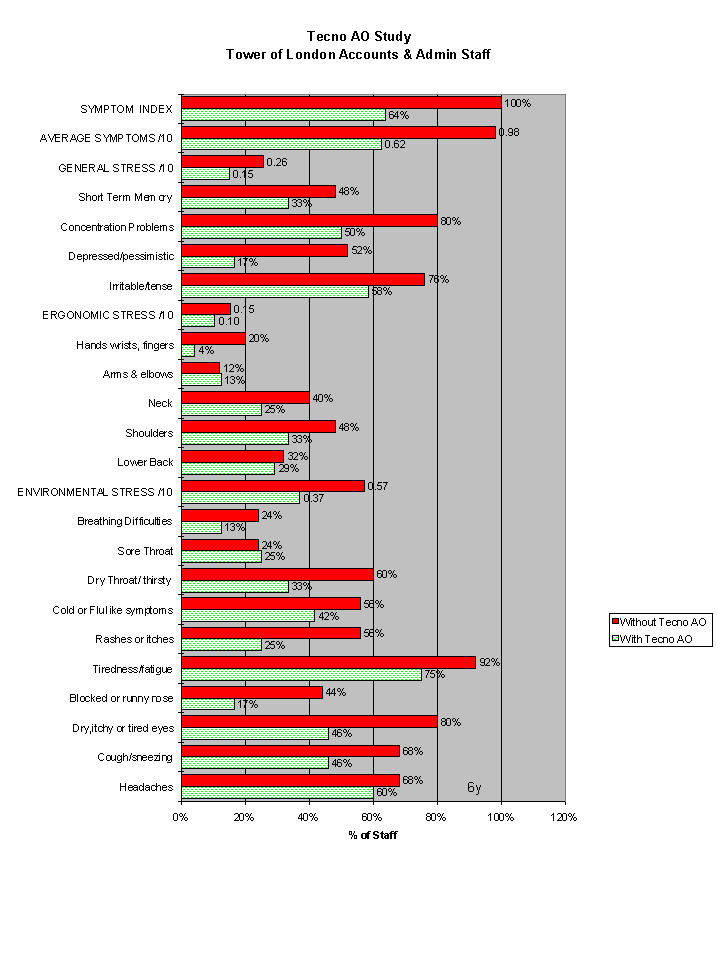
The study uses the Reading Ergonomic & Environmental Symptom Scoring system to provide an objective measure of the effects of the environment on staff. The system has been developed from the principles used in a number of major studies of Sick Building Syndrome including Wilson & Hedge (1987) and G J Raw - BRE 1992. The RES system comprises a list of 19 symptoms and the question is confined to whether any of them have been experienced in the last four weeks. Severe levels of intensity are noted separately. In this study the staff were given a brief explanation as to what the TecnoAO antenna was and what is was intended to do. Staff were told that it may or it may not have an effect on them personally. They were not given any indication as to which symptoms may be affected. The questions fall into three groups (See Graph 1)
a. Ten Environmental Symptoms (Otherwise known as Sick Building Syndrome Symptoms) The causes for any one symptom for any one individual can be a variety of stressors working singly or in combination.
b. Five Ergonomic Symptoms which primarily relate to working posture but have been found to be affected by other aspects of the environment including magnetic fields..
c. Four General Stress Symptoms which can relate to both environmental and other causes.
The responses were obtained by direct interview in order to obtain an immediate response without discussion with or influence by other staff members.
The question was "Have you experienced this symptom during the last four weeks?". The response is recorded on a form with a tick for yes and a zero for no. An experience of unusual severity or frequency was included as an additional note.
Staff were assured of confidentiality in that their individual responses would not be disclosed without their permission. It has been found that otherwise some staff were reluctant to admit to symptoms for fear that it may prejudice their job prospects.
Symptoms which staff felt were due to other causes were included with a note accordingly. It has been found that such symptoms often did have an environmental cause after all. For example, asthma symptoms experienced from childhood have been known to disappear.
The same interview procedure was carried out after four weeks using the Tecno AO antenna and the same yes/no response to each symptom recorded. Where a symptom remained but showed improvement, this was recorded as a separate note.
The actual comparison of results shown on the graphs in this study are based on the percentage of staff experiencing each symptom without the Tecno AO and with it. Therefore any change in percentage means that the symptoms have disappeared. Reductions in intensity only of symptoms are ignored.
RELIABILITY OF RESULTS
The results of the study are shown in various forms of analysis in graphs 1-4.
The question as to how far the responses may fluctuate in any one four week period without any change in the environment has been shown to be insignificant in the overall results. The number of symptoms that come and go regularly tend to be at random and tend to be self cancelling.
The Wilson and Hedge study found that health symptom responses were highly significant at the p<.001 for all corresponding Chi Square values and all Cramers V values.
Analysis of study results by Reading University Department of Statistics confirms single paired t-tests were used in the statistical analysis thus eliminating any variation due to the location of subjects.
Comparing without Tecno AO with Tecno AO gives
t=6.00 p<.0.001 highly significant
Comparing the initial readings with results where dummy antennae have been used gives
t=1.64=0.054 not significant at 5% ( placebo effect)
The differences of the with TecnoAO readings and without were normally distributed but non-parametric tests (Wilcoxon Signed Rank Test) were applied and similar conclusions were drawn. Power test checks reveal there is almost 100% certainty that the conclusions are correct.
ANALYSIS OF RESULTS
The results are based on responses from 25 staff in various locations on the same floor and in the same wing of the building. Other than the size of office the environment furniture and equipment is similar for all members of staff. The trial was run during the period October to December 1999.
The results are analysed on a series of graphs as follows
Graph 1
This compares the percentage of staff experiencing each of 19 symptoms firstly without the Tecno AO and following a period of time in the order of four weeks or more with it fitted to their VDU.
a. Symptom Index Without Tecno AO =100: With Tecno AO= 64. This d shows that the number of symptoms per person has been reduced by 36%. This is in the same order as the 33% reduction produced in the double blind Southampton Health Authority Study. These results were presented at the International Non Ionising Radiation Conference in Cologne in September last year.
b. Average Symptoms per Person (Symptom Score) Without = 9.8 Symptoms: With = 6.2 Symptoms.
The expected symptom score for this office would be 7.0 symptoms per person. This indicates the probable presence of other unusual sources of environmental stress. The indications from the symptom pattern in the East Wing of the same floor is that they are likely to be nearer the norm of 7 symptoms per person. This study has yet to be made.
The reduction of average symptom count is therefore 9.8-6.2=3.6 symptoms per person. The maximum expected reduction in symptom score through normal random symptom variation is plus or minus 0.5 symptoms. However as will be seen in a later analysis the average is unevenly distributed with some staff showing no significant changes and other showing dramatic changes.
c. General Stress Symptoms - Without = 2.6 symptoms: with = 1.5 symptoms out of a total of 4. This is a reduction of 1.1 symptoms per person or 42%.. Most of the reduction in symptoms comes from reducing the effect of magnetic fields in creating hormonal imbalances in the body.
This shows in a 67% reduction in depression/pessimism and a 49% reduction in concentration problems.
The smaller reduction in irritability and tension relates to the source of other stressors.
d. Ergonomic Stress Symptoms - Without = 1.5 symptoms : with = 1.0 symptoms out of a total of 5. The reduction of 0.5 symptoms per person is equal to 33%. There are significant reductions in pain in hands wrist and fingers and neck and shoulders. In early studies we did not expect to see any reduction in ergonomic symptoms. The probable explanation however, is that higher intensity currents do provoke muscle tension. Weaker circulating currents have a lesser effect but do add to the static tension loads experienced when working with VDU’s for long periods in a sitting position.
The percentage of staff still suffering from neck and shoulder pain is still undesirable but should be considerably improved by the new desks and other improvements that are pending.
The levels of lower back pain are still too high at 29% and require further investigation.
e. Environmental Stress Symptoms - Without TecnoAO = 5.7 symptoms: With Tecno AO = 3.7 symptoms a reduction of 2.0 symptoms per person or 35%.
This is the classic list of so called Sick Building Syndrome Symptoms which have been established and agreed upon by the scientific community during the last ten years. The evidence now is that all workers in all offices experience them to varying degrees which is only now beginning to emerge from the studies carried out in the United States and Europe.
Above average reductions in tired eyes, blocked nose, rashes and itches and dry throat conform to results from other studies. The precise biological reasons are complex but do relate to the effect of magnetic fields on suppressing the immune system.
The reduction in cold or flu and sore throat symptoms should be read against an expectancy of them normally increasing not decreasing during the study period.
Graph 2
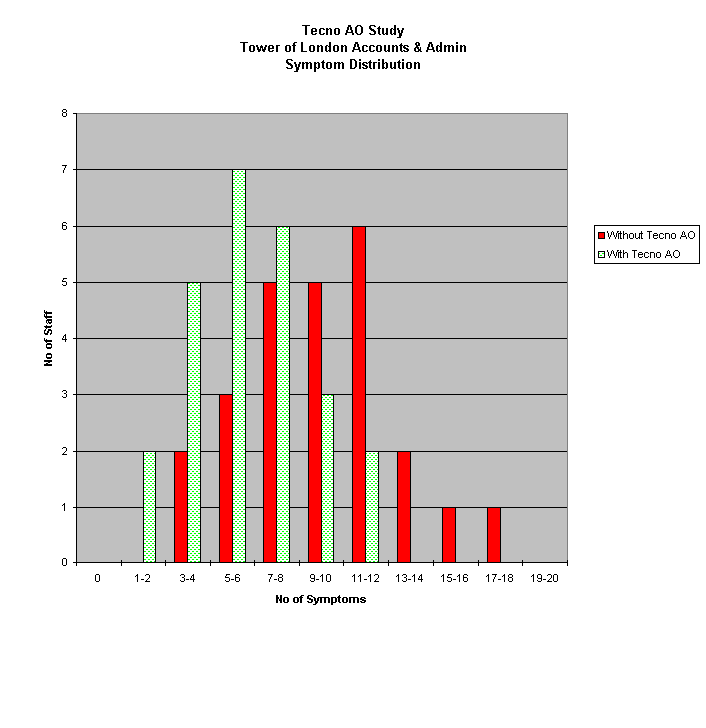
This shows the pattern of the number of symptoms per person. The average number of symptoms per person without the TecnoAO is 9.8 with 10 staff scoring over 11 and only 5 staff scoring under 6 symptoms. With the Tecno AO the average is 6.2 with only 2 scoring over 11 symptoms and 14 staff scoring under 6 symptoms.
Both frequency distributions conform to a predictable statistical distribution. It is interesting to note that the "Without Tecno AO" graph is skewed to the right whilst the "With TecnoAO" is a more normal distribution with a smaller skew to the left. This conforms to the pattern expected when either the body’s resistance to stress is increased or the source of stress is reduced. Individuals react differently to different stressors but the pattern for a normal group of people is often quite consistent in the variation in sensitivities of individuals seems to be distributed at random throughout the population.
The fact that no one scored zero is considered to be an indication of the presence of other significant sources of stress in the environment which require further investigation.
Graph 3
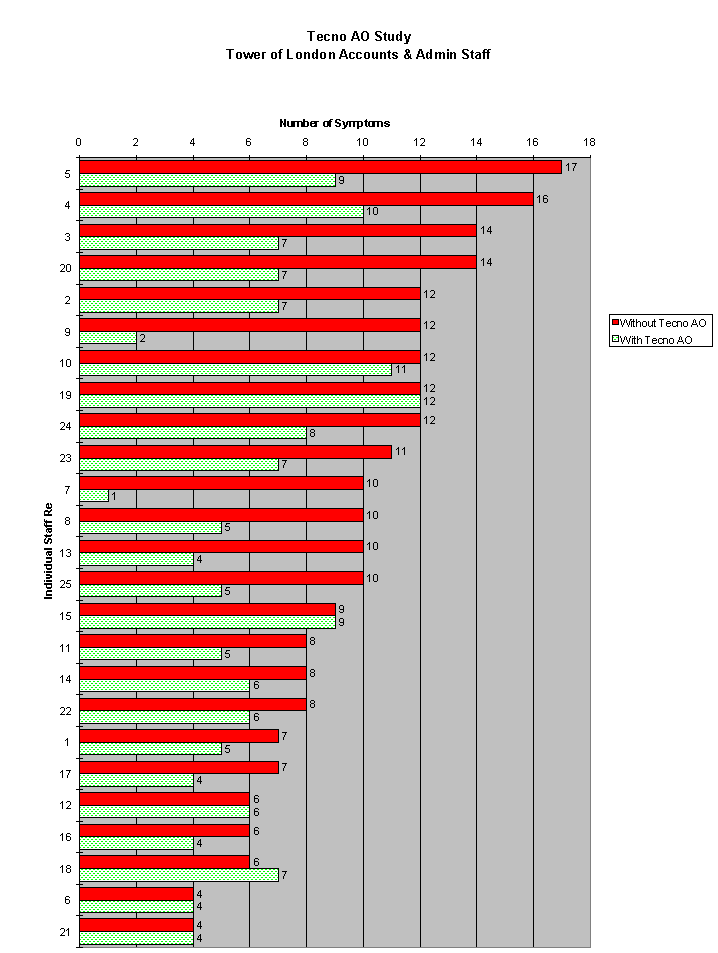
This shows the individual symptom scores with and without magnetic field protection.
It will be noted that 4 of the 5 staff with the lowest symptoms scores have no significant changes and 3 staff with high symptom scores i.e. 10 & 12 symptoms showed no significant change.
This conforms to findings from other studies. The 4 low scoring staff (16% of the total) already had good resistance to stress. The other 3 staff (12%) may or may not be magnetic field sensitive but are being affected by other sources of stress to which their bodies are much more sensitive.
Graph 4
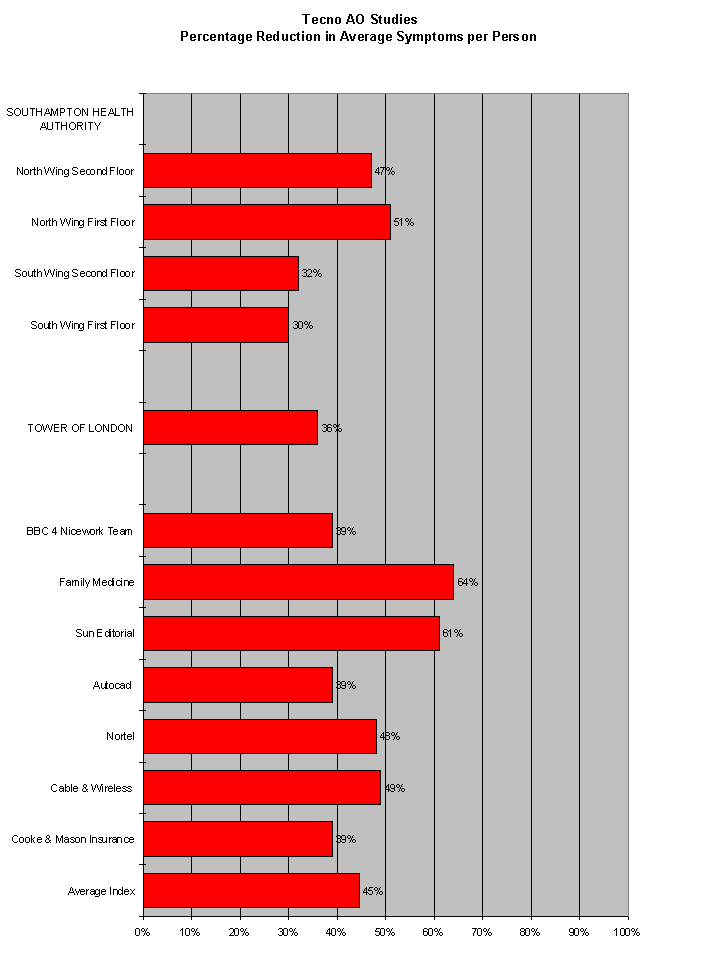
This shows the percentage reductions in symptoms for this study compared with twelve other studies of bio magnetic protection in an office environment.
The first four studies relate to the four floors of the Southampton Health Authority HQ which are a double blind crossover study covering some 120 staff and management. The significance of the results of the individual floors are that the two wings show quite distinct patterns despite the identical structure of office furniture and fit out and furniture. The differences in this case related to occupation, thermal comfort and air quality.
The other eight studies are a variety of occupations and it is interesting to note that all the staff are the subject of high occupational stress and those with the lowest improvements also have other sources of environmental stress identified.
The fact that the results from this study show a 36% reduction in symptoms compared with an average of 45% for the total also confirms the presence of other stressors.
CONCLUSIONS
The results of this study add further confirmation that Extra Low Frequency Magnetic Fields account for on average over a third of ergonomic and environmental stress symptoms experienced by office staff working with VDUs.
It also confirms the findings to date that indicate some 80% of all office staff in all offices experience between 7 and 17 of the 19 symptoms. The 10 so called Sick Building Syndrome Symptoms which we have labelled Environmental Stress Symptoms are experienced in all offices. Sick Buildings are those where the symptoms effects are extreme enough to be disabling to staff.
We would like to thank the Management and Staff for their co-operation in this contribution to the further understanding of the effect off office environments on their occupants.
John Jukes
Stephen Bankler- Jukes
Derek Clements-Croome
January 2000
REFERENCES:
Adey, W. R., 1988, Cell Membranes: The Electromagnetic Environment and Cancer Promotion, Neuro Chemistry Research, 12, 671.
Allen., Ski., et al., 1994, Review of Occupation Exposures to Optical Radiation and Electromagnetic Fields with regard to the proposed CEC Physical Agents Directive, National Radiological Protection Board, Chiltern, Didcot, Qxon .January.
Baker, R.R., (1988), Human Magnetic Reception for Navigation, Electro magnetic fields and behaviourial function, edited by M.E. 0’ Conner and R. H. Lovely, Alan R Liss: New York.
Becker, R.0., 1990, Cross Currents, Published by Tardier & Putnam: New York, ISBN. No. 8744 776090.
Becker, R.0., 1988, Analysis of New York State Department of Health Powerline Project, Journal of Bioelectricity, 7,103.
Bentham, P., 1995, The Development of a New Class qication System for JdenKfring and Managing Risks to Health and Safety in VDU Environments, MiPhil. Thesis, Manchester Metropolitan University.
Bentham, P., 1996, VDU Terminal Illness, Jon Carpenter Publishing.
Coghill, Steward & Phillips, 1996, ELF Electrical & Magnetic Fields in the bedplace of children diagnosed with Leukemia: European Journal of Cancer Prevention Vol 5 No 3
Day, N., 1999, Exposure to power-frequency magnetic fields and the risk of childhood cancer, The Lancet, 354, 1925-193 1.
Delgado, J.M.R., et al., 1982, Embryological Changes Induced by Weak, Extremely Low Frequency Electromagnetic Fields, Journal of Anatomy, 134 (3), 533-51.
Fews, A.P~ et at, 1999, Increased Exposure to Pollutant Aerosols under High Voltage Powerlines, Int.J.Rad.Biol., 75, (12), 1505-1521.
Fews, A.P., ci al., 1999, Corona Ions from Powerlines and Increased Exposure to Pollutant Aerosols, Ibid, 1523,- 1531.
Freude, G., et at, 1998, Effects of Microwaves Emitted by Cellular Phones on Human Slow Brain Potentials, Bioelectromagnetics, 19, 384-387.
Friedman, LI., et al. 1963, Report on Admissions to Psychiatric Hospitals related to Magnetic Storms, Nature, 200: 626.
Goldharbar, G., Poland, N., Watt, R., 1988, Risk of Misscarriage and Birth Defects Among Women who use Video Display Units, American Journal of Industrial Medicine, 13, 695-706.
Graham, C., 1990, Report issued by Midwest Institute, Kansas, USA. Originally summarised in an interview with I Mangold, in Electricity a Shock Instore, BBC Panorama, March 21, 1988.
Hyland, G.J., 1999, Electromagnetic Bio Compatibility of the Workplace: Protection Principles, Assessment and Test, Proceedings of the Non Ionising Radiation Conference, 27 September to October 1., Volume 1, 13 - 240.
Johansson, G., 1984, Stress Reactions in Computerised Initiative Work Journal of Occupational Behaviour, 5,159-181.
Lam, K.O., 1996, American J. Psychiatry, 153, 1548 - 1553.
Monro, J., 1999, Personal Communication.
Perry, F.S., 1981, Environmental Power Frequency Magnetic Fields and Suicide, Health Physics, 41, 267-77.
Preece, 1998, The Effect of a 50 Hz Magnetic Field on Cognitive Function in Humans, Int.J.Rad.Biology, 74, (4), 463-470.
Raw G. J. , 1992, Sick Building Syndrome: A Review of the Evidence on Causes and Solutions, HSE Contract Research Report No. 42/1992
Savitz, D.A., (1988), Ghildhood Cancer and Electromagnetic Field Exposure, American Journal of Epidemiology, 128 21-38.
Sienkiewicz, J., et al., l998a, Deficits in Spatial Learning after Exposure of Mice to a 50 Hz Magnetic Field, Bioelectromagnetics, 79 - 84.
Sienkiewicz, J., et aL, 1998b, Deficits in Spatial Learning after Exposure of Mice to a 50 Hz Magnetic Field, ibid, 486-493.
Sienkiewicz, J., 1998c, Biological Effects of Electromagnetic Fields and Radiation, The Journal of Radiological Protection, 18, 3, 185-193.
Silk, A., 1998, Electromagnetic Hazard and Therapy, 9, (4), 6-8.
Smith, M.J., et al., 1981, An Investigation of Health Complaints and Job Stress in Video Display Operations, Human Factors, 23, 389-400.
Smith, C.W., Best, S., (1989), Electromagnetic Man, Published by J.M.Dent: London.
Strauss, S.E., et al, 1988, National Institutes of Health, Acyclovir Trials on Chronic-fatigue Syndrome, New England Journal of Medicine, 319, 1692.
Tomenius, L., (1986), 15 Hz Electromagnetic Environment and the Incidence of Tumours in Stockholm County, Bioelectromagn etics, 7, 191-207.
Wertheimer, N., Leeper, E., (1989), American Journal of Epidemiology, 120, 18-25.
State Powerline Proj ect Scientific Advisory Panel.
Wertheimer, N., Leeper, E., (1979), Report On Relationship between exposure to 16 Hz Magnetic Fields from Electric Lines and Childhood Cancer, American Journal of Epidemiology, 109, 273.
Wilson & Hedge (1987) A Study of Building Sickness, Building Use Studies/ Office Environment Report
Wolpaw, J, 1987, Biological Effects of Powerline Fields, Albany, New York: N.York
Youbicier - Simo, B.J., et al., 1997, Biological Effects of Continuous Exposure of Embryos and Yong Chickens to Electromagnetic Fields Emitted by Video Display Units, 1990, Bioelectromagnetics, 18, 5 14-523.
Zavala, A., 1984, Stress and Factors of Productivity Amongst Software Development Workers, Human Computer Interaction, edited by Salvendy (Elsevier), 365-370.
| The Tecno AO Antenna | The "Tecno Bug" for mobile phones | Home |
| How the "Bug" works | Scientific Studies | Contact Us |

©Tecno AO (UK) Ltd March1999